

Signal Based Outbound and Sales Intelligence: How Tim Yakubson Built a GTM Operating System on Clay and Claude Code
.png)
.jpg)
Popular Articles
.jpg)
.jpg)
.jpg)
TL;DR
- Signal based outbound turns a one-off campaign into a compounding system built on buying signals, not just a list of names and job titles.
- Clay hides ten to eleven reusable signal plays inside its template library, and most of them cost zero credits to run.
- Claude Code replaces Clay's per-seat cost by chaining the same data APIs into one documented, ten-step outbound pipeline.
- CRM enrichment and prospect qualification work best as one continuous loop, not two separate projects run by two separate teams.
- The stack only earns its keep after the business is scoped on paper. Software should fund a process, not invent one.
Most outbound programs plateau at one campaign a month, and the tool stack is rarely the reason why. The real gap is a signal based outbound system that tells a team who to chase, and why, right now, instead of a static list that goes stale in a week. On this episode of Edbound With Kinner, host Kinner Sacchdev sits down with Tim Yakubson, founder of the London based agency and education business B2B Boosted, to open up the exact GTM operating system his team runs across Clay, Claude Code, and cold email.
What Is Signal Based Outbound?
Signal based outbound is a GTM system that triggers outreach from a documented buying signal, a job posting, a competitor follower, a website visit, rather than a static list of names and titles. The signal decides who gets contacted and why, not a generic ICP filter. Tim's version of this runs on sales intelligence pulled from Clay and Claude Code, and it treats icp research as a live, ongoing task rather than a one-time exercise done before the first campaign.
Why Most Outbound Programs Stall At One Campaign A Month
Kinner names the pattern directly in the conversation. Most agencies hand a client one campaign a month, send it to ten thousand contacts, and call it a strategy. There is no second angle, no new signal, and no reason for reply rates to move.
Tim's counterpoint is structural, not motivational. Once a signal play is templated, the marginal cost of a new campaign is close to zero. The list changes, the copy adapts, but the underlying workflow does not need to be rebuilt.
That reframes the constraint. Teams are not short on tools. They are short on documented, reusable plays that turn a signal into a campaign without a rebuild every time.
- One campaign a month is a tooling failure disguised as a resourcing problem.
- A templated signal play costs the same to run whether it is the first campaign or the fifth.
- Reply rate stalls when the audience definition never changes, not when the copy gets stale.
Tim's agency runs client campaigns off ten or eleven of these templates, so a new client rarely starts from a blank page. A fresh signal play means changing the filter criteria and the copy angle, not rebuilding the pipeline.
The Signal Library Hiding Inside Clay
Most teams open Clay, find people or company data, and stop there. Tim's agency has run over a hundred Clay implementations, and he has narrowed the useful patterns down to ten or eleven templated tables that get reused across almost every client.
The signals worth building around include local business decision makers pulled from Google Maps for companies that do not live on LinkedIn, followers of a direct competitor, followers of a complementary tool that shares your ICP, job postings that mention a specific technology in the description, people who are new in a role and reassessing their stack, and companies that just posted a job opening before any recruiter has reached the third page of applicants.
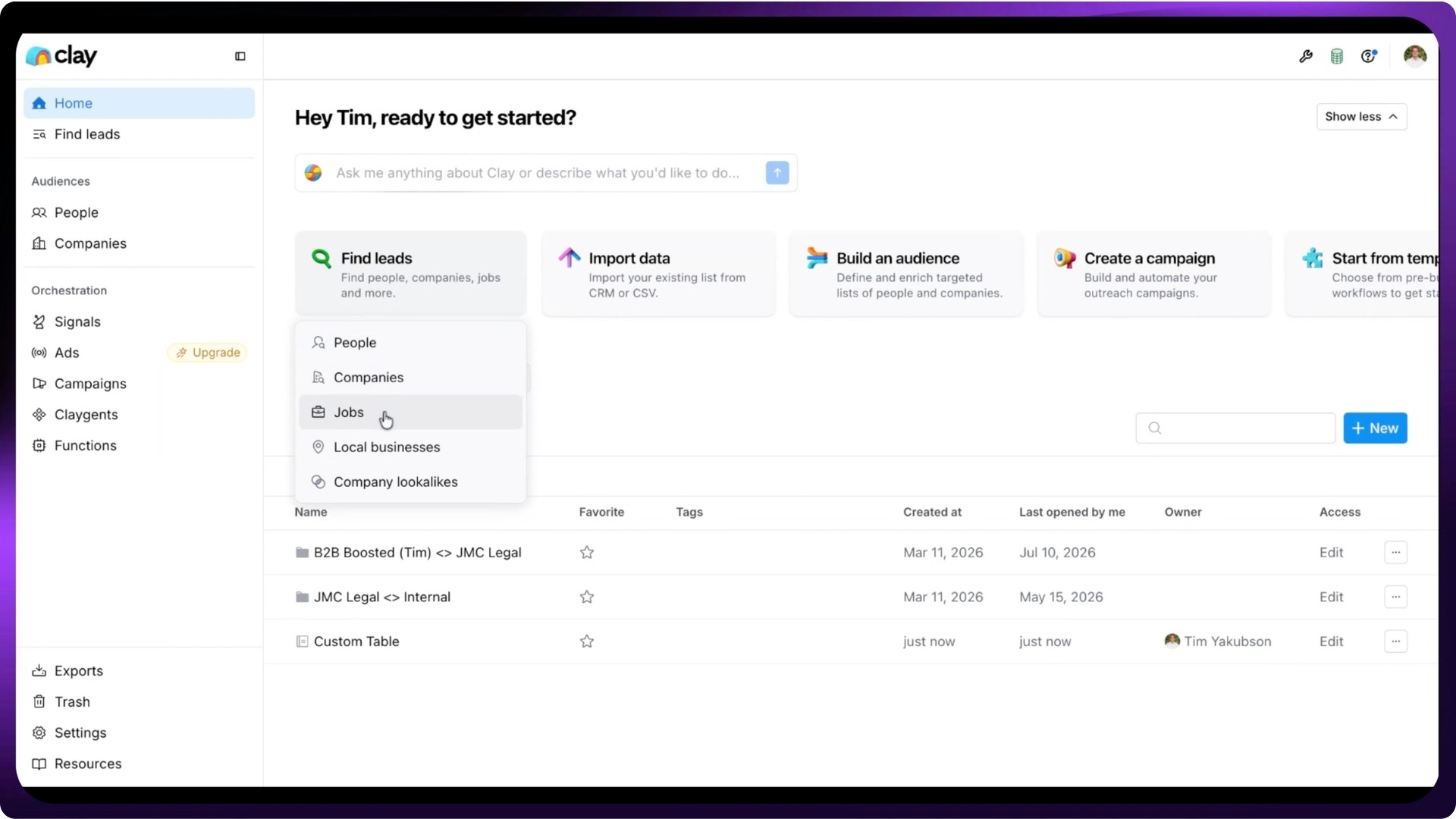
None of this requires an enrichment budget to start. Clay lets you build people, company, and job lists for free. Credits only get spent once you enrich a contact or find an email address, which means the entire signal layer can be tested before a single dollar of enrichment cost is committed.
- Local business decision makers, sourced from Google Maps
- Followers of a named competitor
- Followers of a complementary, non competing tool
- Job descriptions containing a specific technology keyword
- New in role signals
- Fresh job postings before a recruiter reaches page three
Job description keywords deserve special mention, because the signal reads as intent rather than demographics. As Tim puts it: "If they use API, you'd be like, hey, we can see you're at their old school like this, it's very 2018, why not switch to the cloud hosted version which will save you X amount per month." That single line of copy only works because the signal already told the seller what pain the prospect is living with.
This is the same underlying discipline that Laura Erdem describes in her signal based social selling playbook, where the signal, not the title or the company size, decides who gets a message this week. Tim's Clay tables and Laura's social selling framework both start from the same premise. A generic list of job titles is a guess. A documented signal is a reason to reach out today instead of next quarter.
Max Mitcham makes the same case from the demand-gen side, building an entire GTM stack around signals instead of ad spend. Signal quality decides pipeline quality more reliably than budget does.
How CRM Enrichment Turns Old Contacts Into New Pipeline
A CRM full of stale contacts is not dead data. It is an unenriched signal source. Tim's team runs existing CRM lists back through Clay to validate whether an email address still resolves, and if it does not, to find where that person moved. This is company enrichment in its most practical form, refreshing what you already own instead of only buying new lists.
A bounced email is not a dead end. It is a job change signal, and the scale of the problem is bigger than most teams assume. Research summarized from LinkedIn found that the large majority of B2B sellers have lost or delayed a deal after a champion moved roles, and a third have lost multiple deals to the same cause. A CRM that only tracks bounces, and never tracks where the bounced contact landed, is quietly bleeding pipeline every quarter.
This is also where Tim draws a clear line on when Clay earns its cost. As he explains: "Clay best fits tech stacks of companies that are already spending over $1,000 a month on all of these fancy GTM tools."
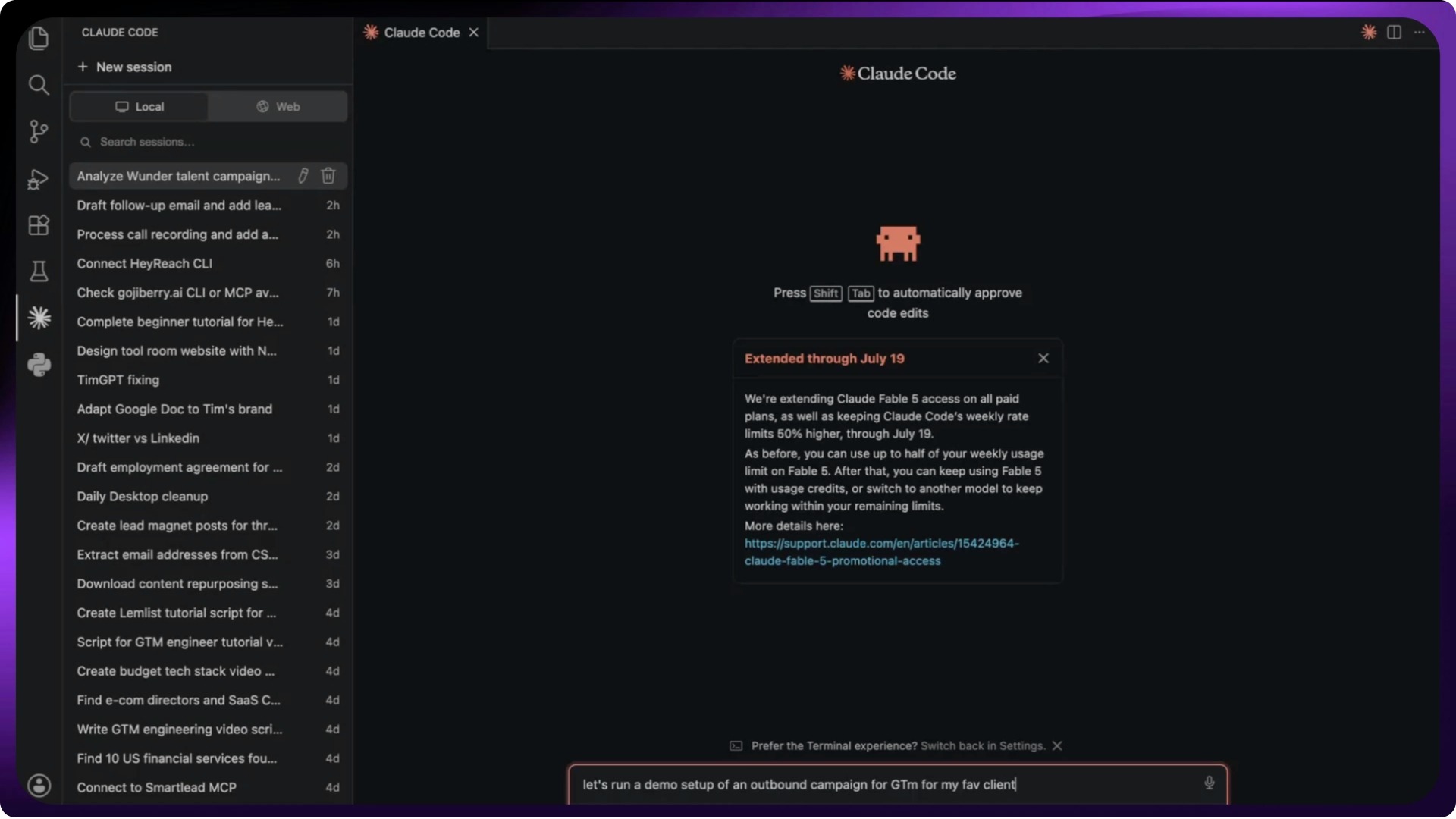
Below that spend threshold, he recommends going straight to Claude Code instead, since the middleman fee stops making sense on a smaller stack.
For a closer look at how Clay's own team frames this enrichment layer, Yash Tekriwal's breakdown of cold outreach that converts covers the same enrichment logic from inside the platform.
Clay versus Claude Code, in one look:
- Under $1,000 a month in existing GTM tool spend: skip Clay, build directly on Claude Code.
- Over $1,000 a month, and already paying for several point solutions: Clay's per-seat cost is offset by the convenience of one interface.
Prospect Qualification Belongs At The Website, Not Just The Inbox
Outbound usually starts outside the business and works inward. Tim flips that with website visitor signals, which qualify prospects who are already showing intent before a single cold email goes out.
The mechanism is simple. A visitor lands on the site, the tool identifies the company and often the individual, and a Slack notification arrives with a lead score, the pages visited, company size, and location. From there a rep can qualify or disqualify with one click, and qualifying can auto enroll the contact into an email sequence.
Clay offers this through its web intent feature, but Tim now prefers a tool called Knock2 for the same job, because the fee it takes is smaller. He also layers in a MEDDIC style buying committee lookup, so a disqualified individual contact does not end a company's candidacy, it just redirects the search to the right stakeholder inside the same account.
Website visitors are one buying signal among many, and Martin Markov's conversation on reading buying intent signals from live buyer behavior makes the same case from a different tool. The lesson repeats across both episodes. A prospect who is already researching your category is a warmer signal than any cold list, and the qualification step exists to catch that person before a competitor does.
The Signal Based Outbound Tool Stack, Category By Category
None of this works without a category map, and Tim keeps his simple. List building sits at the top. Email automation runs through tools like Smartlead and Lemlist. LinkedIn automation runs through Heyreach. Email finding runs through a dedicated finder tool. Email infrastructure, meaning separate sending domains and inboxes, protects the primary domain from ever carrying cold volume. Tim discloses a partnership with Smartlead and Heyreach on the record, worth knowing before weighing his recommendation against your own trial.
The category map exists so a team buys one tool per job, not five overlapping ones. Signal based outbound depends on sales intelligence moving cleanly from one layer to the next, and that only happens when the stack has a clear owner for sourcing, a clear owner for sending, and a clear owner for protecting deliverability. Alan Dsouza makes the infrastructure half of this argument directly, pointing out that a cold email strategy is only ever one third of a system built to convert, not the whole system.
The Human Review Loop
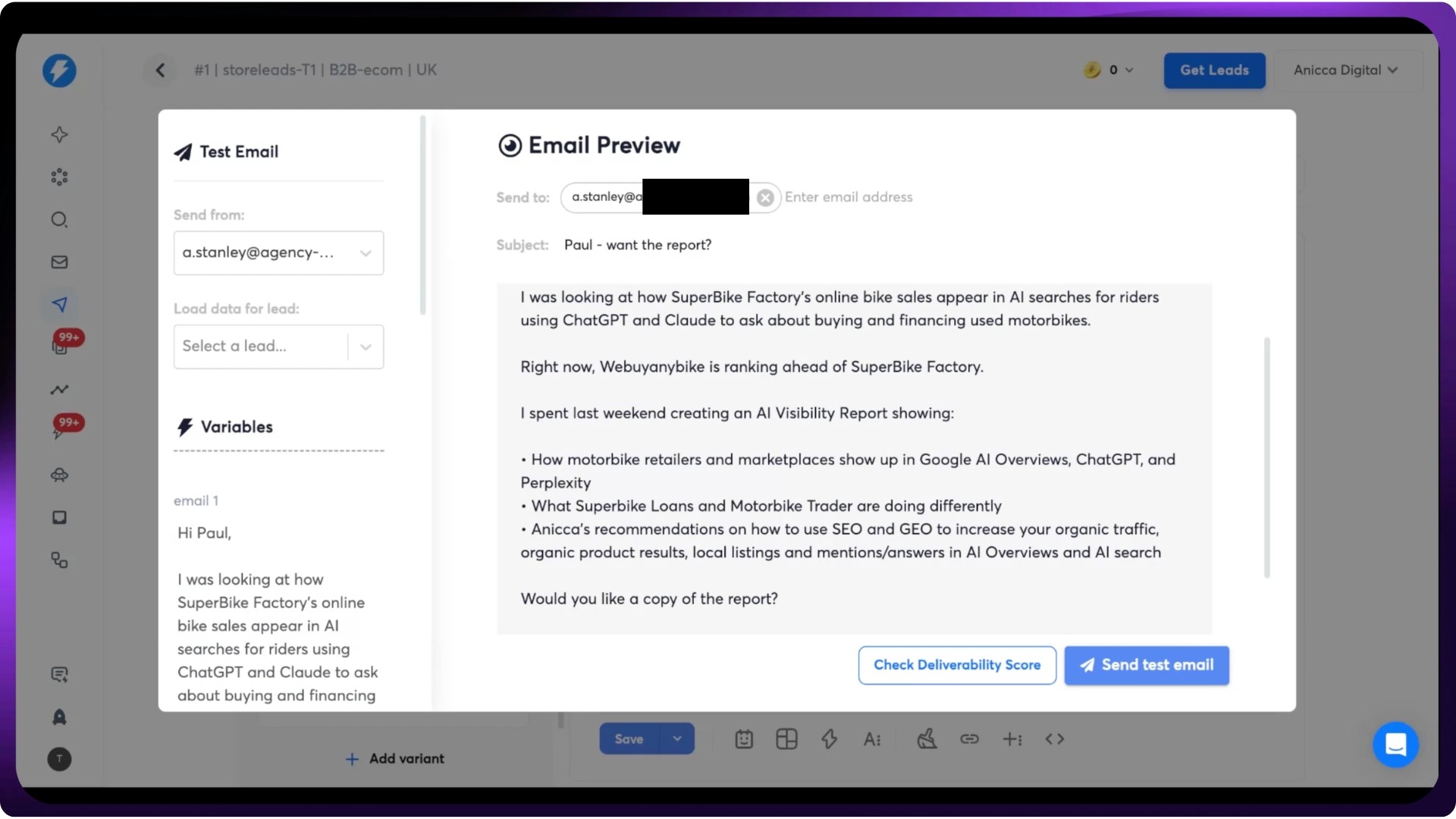
Automation still needs a human checkpoint on the copy. Tim's process treats the first draft from Claude Code as a starting point, not a final send. A rep reviews and rewrites, which both improves the output and trains the system on what good looks like for that specific account.
Brand guardrails get built into the same pipeline. Tim's own QA step describes exactly this discipline: "It will build the list, it will enrich and qualify it, it will submit it, it will do the copywriting, it will QA it to make sure that there are no M dashes or anything of that sort." AI is positioned as the engine that removes the manual labor of building each list and draft from scratch, not as a replacement for a human deciding what gets sent.
From Signal Based Outbound To Pipeline: What Changes When The System Compounds
A signal based outbound system does not require choosing between Clay and Claude Code, or between a CRM rebuild and a fresh list. It requires documenting the signals that actually predict a buyer's readiness, then wiring one repeatable pipeline that can run that play again next week without starting from zero.
Content, distribution, and pipeline compound the same way. Natalie Marcotullio's content-led GTM strategy makes the same point from the content side. A signal library built once keeps paying out in new campaigns for months, the same way a piece of authority content keeps earning search visibility long after publish day. Consistency without burnout comes from documenting the system once, not from a team rebuilding the workflow every time a new angle is needed.
Edbound AI exists to help B2B teams turn this kind of insight into execution at scale, connecting content, distribution, and pipeline into one hub instead of ten disconnected tools. Explore Edbound AI to see how a documented content and outbound system compounds instead of resetting every month.
Resources Shared In This Episode
- Master List: Free Resources From The Tim x Kinner Podcast Episode
- Free Clay Course
- Free Claude Code Course