

The Jobs To Be Done Framework That Turned an IBM Failure Into a $50 Billion Growth System
.png)
.jpg)
Popular Articles
.jpg)
.jpg)

In this episode of the Edbound with Kinner Podcast, host Kinner Sacchdev sits down with innovation pioneer Tony Ulwick to dive deep into the Jobs to Be Done (JTBD) theory and its transformative impact on product development and business growth. Drawing from decades of experience, Tony shares how shifting focus from products to customer jobs can dramatically reduce failure rates in innovation—from the infamous IBM PCjr flop to modern SaaS challenges.
If you're a founder, operator, or marketer grappling with product-market fit, underserved customer needs, or product-led growth strategies for businesses, this conversation is essential. Tony breaks down how to define markets around customer jobs, uncover unmet outcomes, and build solutions that deliver significant value. You'll hear real-world examples, like turning around a medical device company's market share, and practical steps for startups with limited resources.
Whether you're refining your go-to-market strategy or architecting long-term growth, these insights emphasize predictability over guesswork. Learn why companies like Amazon succeed by enabling multiple jobs on a single platform and how to apply JTBD to avoid commoditization through customer education. Tune in to rethink innovation and drive sustainable success in competitive tech landscapes.
Meet the Guest: Tony Ulwick
Tony Ulwick is the pioneer of Jobs-to-be-Done (JTBD) Theory, the inventor of the Outcome-Driven Innovation® (ODI) process, and the founder and CEO of Strategyn, a leading strategy and innovation consulting firm based in San Francisco. His journey began in the 1980s at IBM, where he worked as a product engineer on the ill-fated PCjr, an experience that ignited his passion for understanding why products fail despite vast resources.
Leaving IBM in 1991, Tony founded The Total Quality Group (later renamed Strategyn in 1999) to apply his innovative concepts to real-world challenges. He has consulted for over one-third of the Fortune 100 companies, helping generate billions in revenue through ODI. Notable successes include revitalizing Cordis Corporation's angioplasty balloon market share from 1% to over 20%, leading to its acquisition by Johnson & Johnson, and quadrupling the company's stock price. His frameworks have been applied across industries, from medical devices to consumer goods, consistently turning underperforming products into market leaders.
Tony holds 12 patents for his innovation practices and has authored influential books, including What Customers Want: Using Outcome-Driven Innovation to Create Breakthrough Products (2005) and Jobs to Be Done: Theory to Practice (2016). His articles have appeared in Harvard Business Review and MIT Sloan Management Review, such as "Turn Customer Input into Innovation" (2002) and "The Customer-Centered Innovation Map" (2008). In 2000, he introduced ODI to Clayton Christensen at Harvard Business School, influencing disruptive innovation theory.
With a background in manufacturing engineering and a commitment to making innovation a science, Tony's work emphasizes capturing customer outcomes to predict success.
Connect with Tony here:
Hosted by Kinner Sacchdev
Kinner Sacchdev is the Founder and CEO of Edbound AI which empowers businesses building their AI marketing engine with courses, webinars, podcasts and communities, helping them generate leads and trust with the Edbound method: AI-driven educational content funnels. Recognized in Business World 35U35 and Times 40U40, Kinner specializes in helping teams build scalable systems for growth using content led marketing known as Edbound Marketing, boost productivity, and drive growth through AI-driven strategies.
Follow him on
- Twitter: @knsacchdev
- LinkedIn: linkedin.com/in/kinner
- Instagram: https://www.instagram.com/kinnersacchdev/
- YouTube: https://www.youtube.com/@kinnersacchdev/videos
The Origins of Jobs to Be Done and Outcome-Driven Innovation
Tony traces his interest in innovation back to the 1980s at IBM, where the PCjr's failure—headlined as a flop in the Wall Street Journal—highlighted a disconnect between company assumptions and customer metrics. This sparked a quest to understand customer value through metrics like speed, predictability, and output quality, inspired by Theodore Levitt's famous quote: "People don't want a quarter-inch drill; they want a quarter-inch hole."
Shifting focus from products to the customer's job, Tony developed ODI by studying jobs independently of solutions. Customers aim to execute jobs faster, more predictably, and without defects—mirroring manufacturing principles like Six Sigma. ODI captures 100+ customer outcomes, quantifies them for importance and satisfaction, and targets underserved needs for solutions that improve performance by at least 15%. This framework ensures products create significant value, preventing failures from entering development.
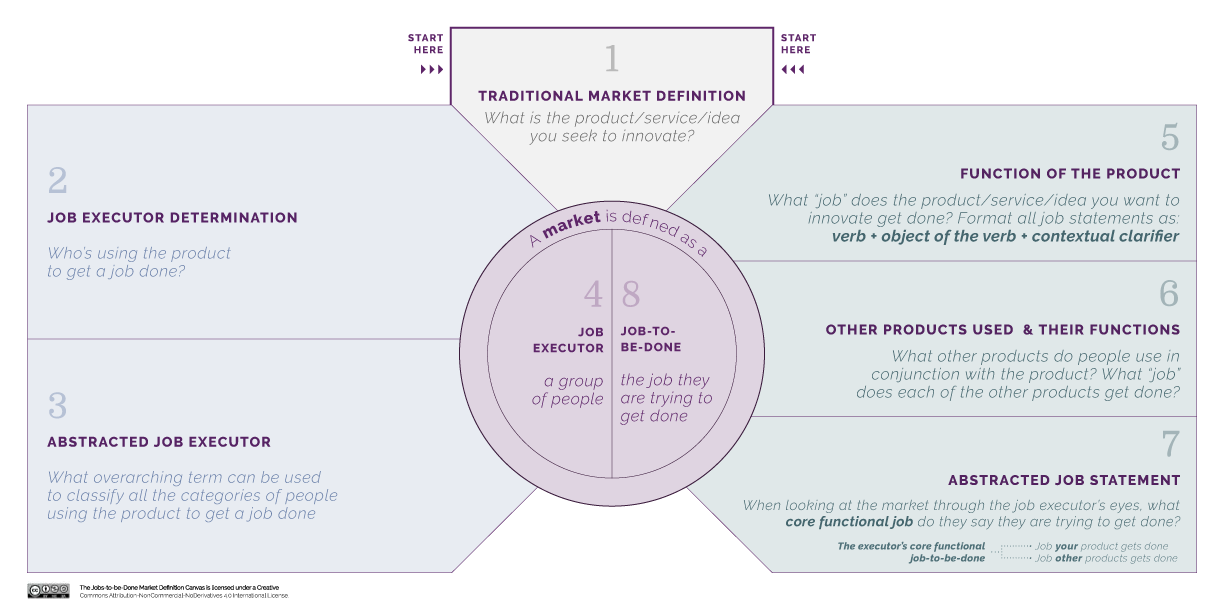
Image Source: Strategyn.com
For SaaS and tech platforms, Tony emphasizes defining markets around job executors and jobs, like helping tradesmen cut wood in a straight line rather than just selling circular saws. This approach transforms guesswork into a predictable process, enabling a wide variety of go-to-market strategies for enterprises and businesses of all sizes.
"If we only knew what those metrics were well in advance, we could just design the product around those metrics and make sure we create value for customers."
– Tony Ulwick
Applying JTBD to Startups: From Idea to Funding
Startups often lack time and resources for extensive research, much like those aiming to go from bootstrapped to $100K ARR, but Tony recommends starting with the JTBD lens to define markets quickly—focusing on job executors and the core job.
Imge - Source: Strategyn
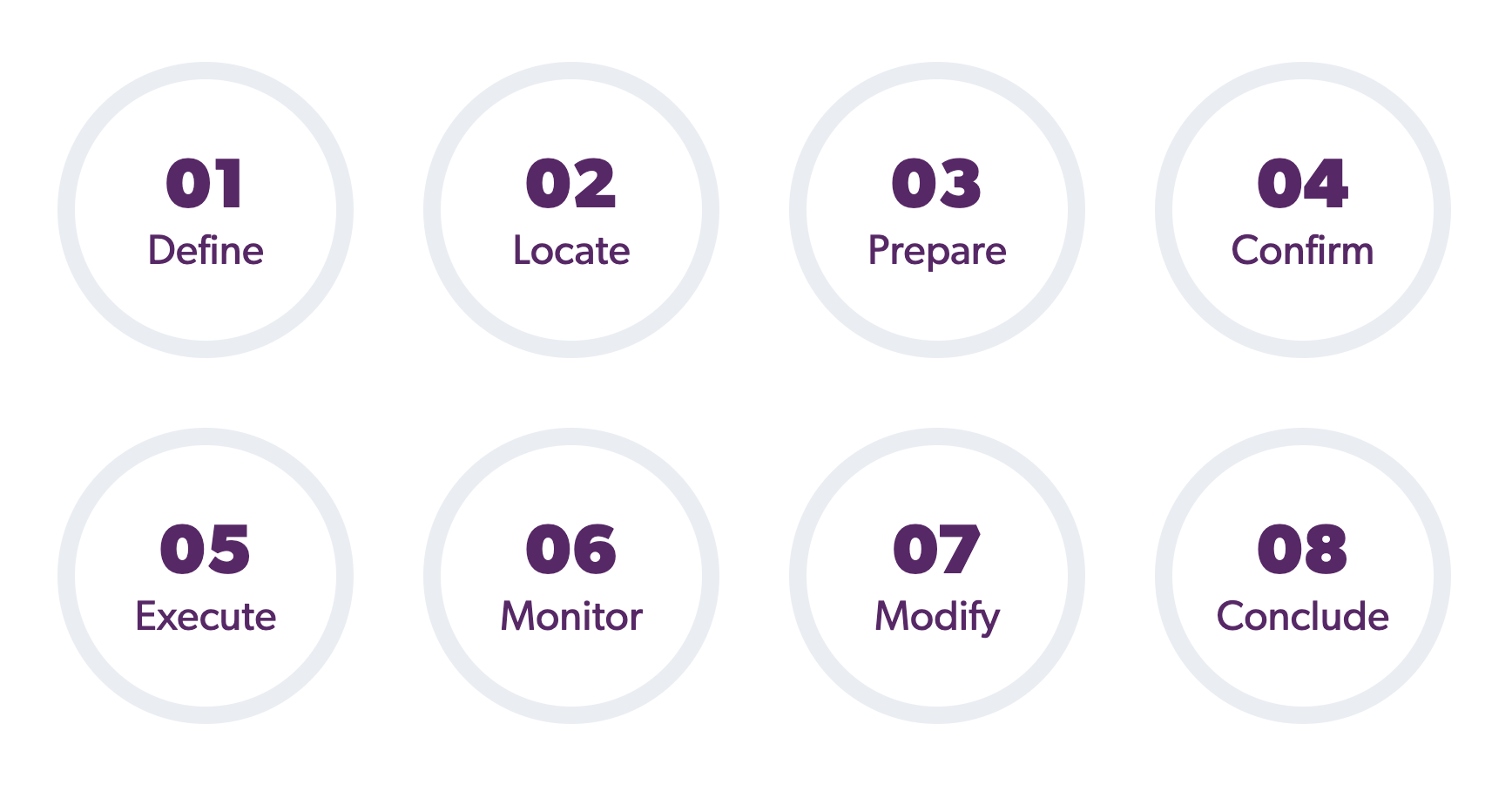
Tony recommends creating a job map: a high-level flow of customer accomplishments in problem space, not solution space. This reveals the entire job, allowing architects to build comprehensive solutions rather than piecemeal ones.
With initial funding, dive deeper into outcomes to identify top underserved needs. For early-stage founders, interview 3-5 customers in 2-3 hour sessions to refine the job statement and map. Use AI for initial guidance on job definitions and maps, but validate with real consensus.
This builds compelling investor stories: outline the job, competitors' gaps, and your vision for superior execution. As funding grows, quantify outcomes to ensure products improve jobs by 15% or more, proving value.
"If the entrepreneur knows what the entire job is, they can start architecting a solution that will eventually get the entire job done."
– Tony Ulwick
Real-World Case Study: Transforming Cordis Corporation
One of Tony's early successes was with Cordis, whose angioplasty balloon market share had plummeted to 1.5%. Studying interventional cardiologists' job—restoring blood flow in arteries—they captured 75 outcomes, quantified them, and identified 15 underserved needs.
Initially, Cordis revamped marketing around three already-satisfied outcomes, boosting share to 4% in six months. Then, they launched 19 new products addressing the rest, achieving #1 or #2 positions and over 20% market share. Prioritizing a heart stent addressed restenosis, creating a billion-dollar business in two years. Cordis' stock soared from $8 to $108, leading to J&J acquisition. They even patented drug-eluting stents, earning $600M in IP fines.
This single study demonstrates JTBD's power: uncovering unique inputs, prioritizing needs, and driving multi-dimensional value.
"All this came from one study, right? And understanding the job at a different level and coming at it from a different angle."
– Tony Ulwick
Research Methodology: Discovering Customer Jobs and Outcomes
To uncover jobs, conduct qualitative interviews with 3-5 customers per session, avoiding solution-space observations. Start with straw-man job statements, let customers refine.
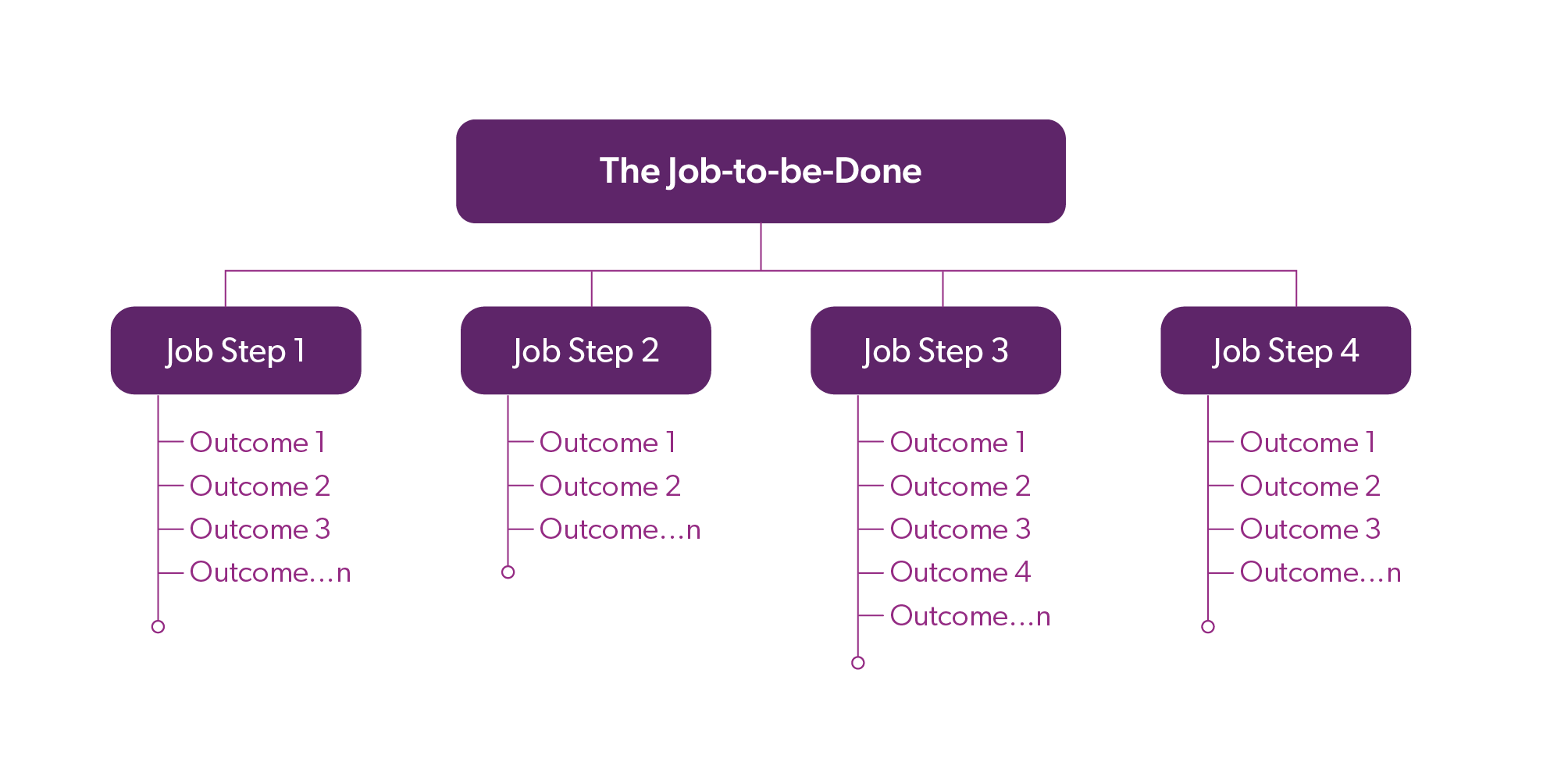
Image - Source: Strategyn
Build job maps by asking for milestones in super slow motion: "What's the first thing? Next?"
For outcomes, tier from high-level jobs to steps (8-15 typically), then 10 outcomes per step. Use the Market Definition Canvas (downloadable from Strategyn.com) or HBR's "The Customer-Centered Innovation Map." AI aids initial drafting, but customer consensus is crucial.
For startups, weekend sessions suffice—e.g., six dentists in two days yielded full maps and outcomes. Quantify via surveys (270-500 respondents) for importance/satisfaction, revealing underserved areas.
Market Segmentation and Go-to-Market Strategies
Avoid demographic or psychographic segmentation; instead, segment post-quantification around unmet needs using factor/cluster analysis. This reveals overserved/underserved groups, guiding strategies like differentiation or disruption.
For startups, target underserved customers as entry points —e.g., Bosch targeted finish-cut users in circular saws, capturing 33% market via 14 unmet needs. Distinguish job executors (users) from economic buyers (purchasers), studying both separately. Tailor GTM messaging: functional/emotional for executors, financial for buyers.
In SaaS, like Canva, designers (executors) push adoption to CMOs (buyers). For platforms like Amazon, abstract jobs broadly (e.g., buy products online) to enable multiple sub-jobs, building exponential value.
Growth Paths: From Core to Adjacent Markets
Start by expanding within the core job—use job maps to identify unaddressed parts, evolving to perfect execution (e.g., software + AI + hardware). This can sustain growth for years.
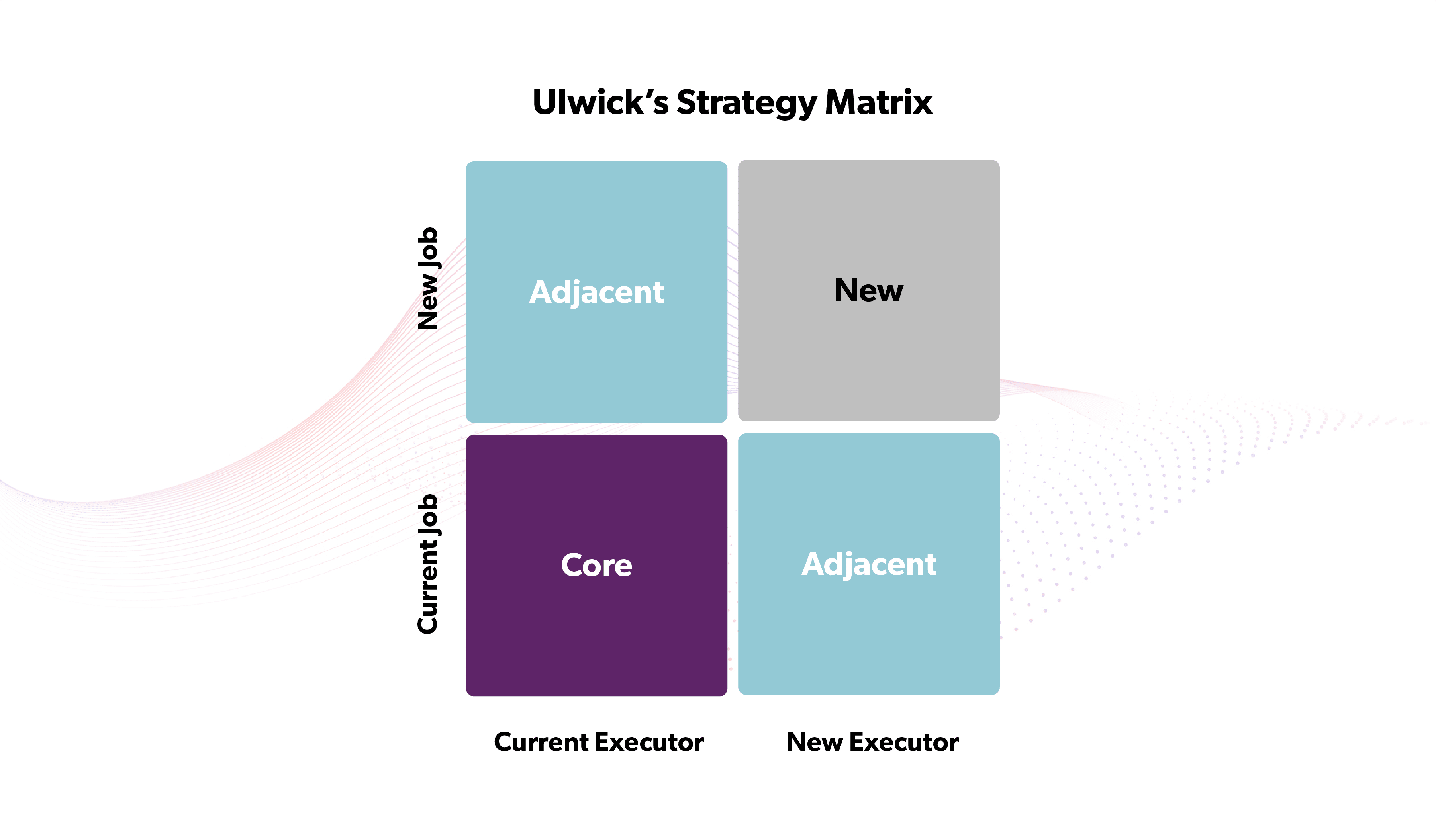
Image Source - strategyn
Next, pursue adjacent markets: same customers, new jobs. Finally, new customers and jobs—higher risk, but mitigate by building infrastructure for broad applicability, like Amazon's online buying platform or Apple's smartphone ecosystem.
Metrics for expansion: Monitor outcome satisfaction; refresh quantitative research every 2 years to prioritize next unmet needs. Aim for the most efficient path: outcomes impacting the largest population.
"The first path to growth is get more of the job done... Then go to adjacent markets."
– Tony Ulwick
Customer Education and Platform Utilization
In commoditized markets, educate customers on full job potential to combat underutilization—e.g., mobile phones or Canva's 150+ workflows vs. typical 5-15 used. Pre-purchase, map jobs to clarify value; post-purchase, expand usage to serve multiple markets.
Platforms win by enabling exponential jobs: help current customers do more, then attract new executors. Amazon started with books but built for "anything online"; patience and infrastructure investment pay off.
"If your platform can get more jobs done for different customers, then now your platform's serving multiple markets."
– Tony Ulwick
The Full JTBD Playbook: Step-by-Step Summary
- Define the customer's job.
- Build a job map for growth opportunities.
- Collect outcomes measuring success.
- Quantify outcomes for importance/satisfaction.
- Segment around unmet needs.
- Choose strategy and target segment.
- Conceptualize solutions addressing needs.
- Develop and launch, knowing 15%+ improvement.
For Series A companies, map next growth steps such as to launch a community, prioritizing unmet needs to stay ahead of competitors e.g., Crowell's phased addressing of 60 needs sustained leadership for 15 years.
"The reason you want to invest in this is so you know the next set of unmet needs to go focus on in some priority order."
– Tony Ulwick
Key Takeaways
- Define Markets Around Jobs: Shift from product-centric to job executor + job (e.g., not circular saws, but cutting wood straight).
- Use Job Maps for Completeness: Outline full customer journeys in problem space to architect holistic solutions.
- Capture and Quantify Outcomes: Identify 100+ metrics; prioritize underserved ones for 15%+ improvements.
- Segment by Unmet Needs: Avoid personas; use data to reveal real groups for targeted strategies.
- Distinguish Buyers and Users: Tailor GTM: functional for executors, financial for economic buyers.
- Grow from the Core: Expand current job before adjacent or new markets to minimize risk.
- Leverage AI Sparingly: For initial job/map ideas, but validate with customer interviews.
- Educate for Utilization: Combat underuse through pre/post-purchase job mapping to unlock platform potential.
- Prioritize Efficient Paths: Focus on outcomes impacting the largest populations for sustainable growth.
- Refresh Research Regularly: Quantitative checks every 2 years to stay ahead.
- Avoid Guesswork: Ensure products win pre-development by proving value.
- Build for Scalability: Abstract jobs broadly for platforms enabling multiple sub-jobs.
Subscribe to the Edbound with Kinner Podcast for more insights on GTM, PLG, AI, tech and growth.